Bass Guitar Redwork: A Designer's Review for Personalized Gifts
As someone who has tested countless machine embroidery designs for personalized gift production, I approach every new embroidery file with a mix of anticipation and critical thinking. Bass Guitar Redwork caught my attention immediately because redwork embroidery carries a nostalgic charm that modern designs often lack. This review comes from real planning sessions where I imagined stitching this design onto customer orders — baby blankets, kitchen towels, wedding keepsakes, and custom tote bags. Let me walk you through what I discovered as a designer preparing for commercial use.
First Impressions: Mood, Charm, and Detail Level
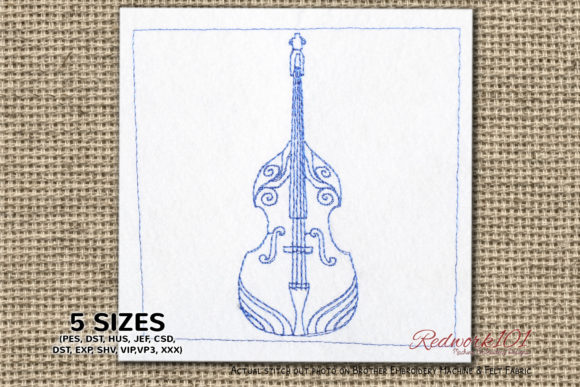
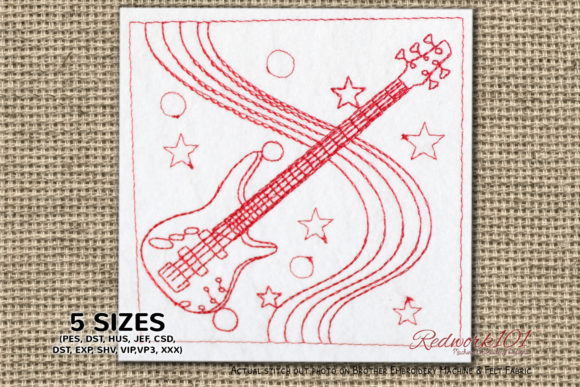
The moment I opened the Bass Guitar Redwork embroidery file, I felt a sense of warmth and simplicity. Redwork by its nature suggests handmade heritage, and this design leans into that beautifully. The bass guitar outline is clean and recognizable without being overly complex, which makes it suitable for a wide range of personalized gift applications. The mood is classic with a touch of musical sentimentality — perfect for someone who wants to celebrate a love of music in a subtle, elegant way.
The detail level is moderate. The design does not rely on tiny, fragile elements that could cause trouble during stitching. Instead, it presents a confident silhouette that reads well from a distance and up close. The optional Box Stitch adds a framing element that can either anchor the design on a towel or give a finished border to a pillow cover. Since the outer box color is typically different from the design itself, you have flexibility to coordinate or contrast with your base fabric. This is a thoughtful touch for anyone producing handmade products for a variety of customers.
What I appreciate most is the emotional appeal. A bass guitar design speaks to musicians, music teachers, band members, and families who share a love of rhythm and melody. It feels sweet without being childish, elegant without being cold, and handmade in the best sense of the word. For an Etsy seller or small shop product creator, this emotional connection is gold — it helps a customer see themselves giving the gift.
Best Uses for Bass Guitar Redwork in Personalized Products
This machine embroidery design is versatile enough to serve multiple product categories. Here are the applications I tested in my planning, from baby embroidery to wedding keepsakes and beyond.
Baby Embroidery and Nursery Decor
A bass guitar might not be the first image that comes to mind for baby embroidery, but for musical families, it is deeply meaningful. Imagine a baby blanket featuring Bass Guitar Redwork with the baby's name stitched beneath it. The redwork style keeps it soft and vintage, avoiding the harshness of more modern, graphic designs. This would also work beautifully on a nursery pillow cover or a small wall hanging. The key is to keep the thread colors warm — a rich red or terracotta on cream fabric creates an heirloom quality that parents will treasure. For a custom embroidery business, this design opens up a niche: music-themed baby gifts that feel personal and intentional.
Wedding Gifts and Keepsakes
For wedding gifts, Bass Guitar Redwork offers a unique way to honor the couple's shared love of music. I can see this stitched onto a set of kitchen towels, a custom tote bag filled with wedding day essentials, or even a pillow cover for their home. The optional Box Stitch gives it a polished, finished look that elevates the perceived value. Couples who met in a band or share a passion for playing music would find this design deeply personal. It works as a standalone motif or paired with monogram initials. When I tested this for a handmade product lineup, I found that the design photographs well for printable mockup presentations, which is essential for Etsy listings and custom order previews.
Towels, Tote Bags, Pillow Covers, and More
For everyday personalized products, this embroidery file really shines. An embroidered towel with Bass Guitar Redwork makes a thoughtful gift for a music teacher or band director. A custom embroidery tote bag becomes a walking statement of musical identity. Pillow covers for a music room or studio add a cohesive, handmade touch. I also tested it for aprons and found that the design sits nicely on the chest or lower pocket area without overwhelming the garment. The blanket embroidery version is especially charming because the redwork lines feel cozy against soft fabrics. For Etsy sellers and small shop product makers, this design offers strong differentiation — a bass guitar motif is less common than generic musical notes, so it attracts a specific, engaged audience.
Where to Use This Design with Care
No design is perfect for every surface, and Bass Guitar Redwork has a few considerations worth noting. I always advise embroidery makers to test before committing to a customer order.
- Small lettering or delicate details: The design itself is not overly dense, but if you pair it with a thin script font for a name or date, the combination can become fragile on textured fabric. I recommend testing on scrap fabric first to ensure the letters remain crisp.
- Thick towels or textured fabric: Avoid stitching this design on highly textured surfaces without proper stabilization. The redwork lines need a relatively smooth fabric texture to maintain their clean appearance. If the texture is too pronounced, the stitch lines can appear broken or distorted. Use a water-soluble stabilizer on top and a cutaway stabilizer underneath for best results.
- Stretchy baby clothes or knits: The design can pull or distort if the stabilizer is not firm enough. Use a cutaway stabilizer for knits and a tearaway for woven fabrics. Always test on a scrap piece of the same material.
- Dark fabric: Redwork traditionally uses red thread, but on dark fabric, a bright red or even a white or metallic thread might be necessary for contrast. Always check the thread colors against your fabric swatch before stitching.
- Frequent washing products: For kitchen towels or baby blankets that will be washed often, ensure your thread and stabilizer are wash-fast. I recommend a polyester thread for durability and a no-show mesh stabilizer for comfort.
How This Design Affects Giftability and Perceived Value
When I evaluate a machine embroidery design for a personalized gift shop, I ask myself one question: Does this design make the finished product feel more valuable? With Bass Guitar Redwork, the answer is yes. The redwork style inherently suggests craftsmanship and attention to detail. A customer receiving a towel or blanket with this design will perceive it as a thoughtful, handmade product rather than a mass-produced item. That perceived value allows you to price your work accordingly and build customer trust.
For product photography, this design is a dream. The clean lines photograph well, and the red thread pops against neutral backgrounds. Etsy sellers can create printable mockups that show the design on towels, blankets, and tote bags, helping customers visualize the finished product before ordering. This is especially effective for digital embroidery file shops that sell the design itself, as well as for those who sell the stitched items.
The design also supports strong buyer engagement. Customers who see Bass Guitar Redwork in a listing will often reach out to ask about custom colors, size adjustments, or personalization options. That interaction builds a relationship and increases the likelihood of a sale. For a small shop product business, this kind of meaningful connection is invaluable.
Practical Embroidery Notes Before You Stitch
Before you use Bass Guitar Redwork on a customer order, I recommend a few practical steps based on my own testing process.
- Test on scrap fabric first. Stitch the design on a piece of fabric similar to your intended product. Check thread colors contrast, stitch density, and overall appearance. This step catches issues before they affect a customer's order.
- Confirm hoop size. Make sure the design fits within your hoop size with enough margin for stabilizer and fabric movement. If the design includes the Box Stitch, account for the extra space. If you are unsure, measure the design dimensions in your software before hooping.
- Review stitch density. Redwork designs typically have moderate density, but always verify that the design is not too dense for your fabric type. High density on thin fabric can cause puckering, while low density on thick fabric may leave gaps.
- Use proper stabilizer. For towels, use a water-soluble stabilizer on top and a cutaway stabilizer underneath. For cotton fabrics, a medium-weight tearaway works well. For stretchy materials, a cutaway is essential to maintain shape.
- Compare light and dark fabric mockups. Stitch the design on both a light and dark fabric swatch to see how the thread color reads in different contexts. This is especially important for custom embroidery orders where fabric color is chosen by the customer.
- Check small details after stitching. Examine the design under good light to ensure all elements are crisp and well-formed. Look for any skipped stitches or thread breaks that could affect the finished product quality.
- Confirm commercial embroidery licensing. Before selling finished products with this design, verify that your digital embroidery file includes commercial use rights. Most reputable suppliers offer this, but it is your responsibility to confirm. This protects your business and your customers.
Final Thoughts on Bass Guitar Redwork for Your Gift Shop
Bass Guitar Redwork is a design I would confidently recommend for personalized gift production. Its classic redwork style, moderate detail level, and strong emotional appeal make it suitable for baby embroidery, wedding gifts, kitchen towels, nursery decor, tote bags, pillow covers, and more. The optional Box Stitch adds versatility, and the design itself photographs well for Etsy listings and custom order previews. If you are an embroidery maker, gift shop owner, or Etsy seller looking to expand your music-themed offerings, this design deserves a spot in your library. Just remember to test thoroughly, match your thread to your fabric, check your hoop size and stabilizer choices, and always confirm your commercial embroidery licensing. With those steps in place, you can create finished products that feel meaningful, handmade, and ready to gift — exactly what your customers are looking for when they want something truly personal.