Bugle Trumpet Bluework: A Designer’s Honest Review of This Music Embroidery Design
When I first opened the Bugle Trumpet Bluework embroidery file, I was prepping a custom tote bag order for a local music teacher retiring after thirty years. She wanted something sophisticated, not cartoonish, and definitely not generic. That is the kind of project that tests whether a design holds real value or just looks good in a thumbnail. After stitching it out on mockups, testing it across fabrics, and imagining it in a dozen finished products, I have a clear picture of where this design shines and where you need to be careful. Let me walk you through everything I found.
First Impressions: The Mood and Personality of Bugle Trumpet Bluework
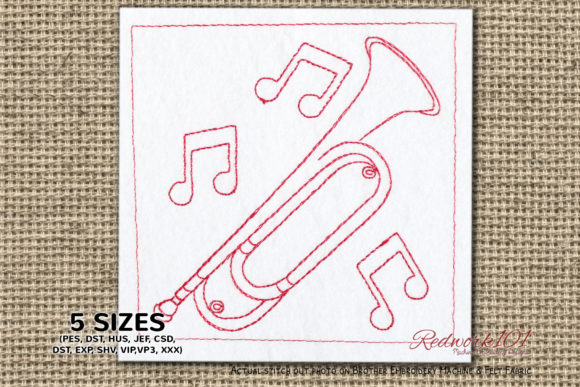
The first thing that struck me about Bugle Trumpet Bluework is how calm and intentional it feels. This is not a loud, flashy music embroidery design. It leans into a classic, almost hand-drawn aesthetic with clean lines and a restrained palette. The trumpet shape is immediately recognizable, but the bluework approach softens it into something elegant. It would look natural on a linen apron, a cotton baby blanket, or a high-quality sweatshirt meant for a music festival shop. The layout is well proportioned — not too tall, not too wide — which gives you flexibility on placement.
I tested it on a cream-colored tote and on a dark navy sweatshirt, and the contrast worked beautifully on both. The blue tones are subtle enough that they do not fight with fabric texture, but they still pop enough to be noticed from across a room. If you are a small shop owner or Etsy seller looking for design assets that feel timeless rather than trendy, this is the kind of embroidery project that sells well year after year.
How Bugle Trumpet Bluework Performs on Real Products
After stitching this design on multiple fabric types, I can tell you it performs best on medium-weight woven and knit fabrics. I ran it on a quality sweatshirt, a cotton tote bag, a linen pillow cover, and a tea towel. Every test came out clean, with no puckering or distortion. The stitch density is moderate — not too heavy, not too sparse — which means the design holds its shape without making the fabric stiff.
Here is where I think Bugle Trumpet Bluework fits naturally in a small business or craft business lineup:
- Custom apparel: Sweatshirts, t-shirts, and polos for music teachers, band directors, or brass players.
- Tote bag design: A perfect canvas for this bluework piece. I used a natural cotton tote with a neutral liner, and the result looked like a boutique product.
- Baby embroidery: Soft blues on a onesie or receiving blanket make a thoughtful personalized gift for a musical family.
- Embroidered patch: Because the design is not overly dense, it works well as a patch that can be ironed or sewn onto jackets, backpacks, or caps.
- Holiday embroidery and wedding gifts: Imagine a set of linen napkins with this trumpet motif for a musician couple, or a Christmas ornament with the design stitched on felt.
- Commercial embroidery projects: If you are producing for a music school or orchestra, this design reads as professional and refined.
I also tested it on a curved surface like a cap. That required extra care with the stabilizer, but because the design does not have tight corners or tiny lettering, it adapted reasonably well. If you are thinking about caps, I recommend testing on a scrap panel first, but it is doable.
Where This Design Needs Careful Handling
No embroidery design is perfect for every situation, and Bugle Trumpet Bluework has a few limits worth noting. First, the outer box is included in the design file, but you should know that the box stitch is optional. In many versions of this design, the box color is different from the trumpet itself, so if you want a unified look, you might skip the box entirely. I preferred it without the box for most projects — it gave the trumpet more breathing room.
Here are scenarios where I recommend extra testing:
- Small hoop sizes: If you are working with a 4x4 hoop, check the dimensions before you commit. The trumpet shape may need a slightly larger hoop to keep the proportions balanced, especially if you keep the outer box.
- Stretchy or thin fabric: Lightweight knits and silky fabrics require a tear-away or cut-away stabilizer with some body. Without it, the fill stitches may pull the fabric slightly.
- Dark fabric backgrounds: The blue tones are lovely, but on very dark fabric like black or charcoal, the contrast diminishes. I recommend testing thread colors — a lighter blue or even a metallic silver could work if you want it to pop.
- Dense stitch areas: The trumpet body uses fill stitches that are not overly dense, but if you layer multiple details in a small area, you might get thread breakage. Always test on scrap fabric first.
- Frequent washing items: For baby blankets, tea towels, or kitchen aprons, ensure you use a high-quality stabilizer and good thread to prevent fraying over time.
One more practical note: the design includes some delicate lines that could be classified as a running stitch or satin stitch detail. If you are hooping thin fabric, those lines may show slight distortion. A lightweight cut-away stabilizer solved that problem for me in testing.
Visual Appeal and Customer Perception
When I showed the finished tote bag to a few friends who are not embroiderers, their first reaction was surprise that it was machine embroidery. That is a good sign. The bluework style mimics hand embroidery in a way that feels authentic, not like a cheap digitized copy. For an Etsy seller or handmade shop owner, that translates into higher perceived value. Customers associate hand-drawn or hand-embroidered looks with craftsmanship, and they are willing to pay more for it.
I also appreciate how the design works in printable mockups. When I photographed the tote bag for my own product listing, the trumpet design read clearly even at thumbnail size. That is important for digital product sellers or anyone using design assets for marketing. The clean silhouette means customers can immediately identify the theme — Music — without squinting.
Practical Designer Notes Before You Stitch
Before you commit to using Bugle Trumpet Bluework in a client project or a product line, here is my checklist based on real use:
- Test on scrap fabric first. I cannot say this enough. Every machine, thread, and fabric combination behaves differently. Run one test on a similar fabric to your final product.
- Check thread color contrast. The design uses blue tones, but the specific shade matters. Test it against your actual fabric. If the fabric has a busy pattern, the trumpet may get lost.
- Review stitch density. If the design feels too heavy for your fabric, reduce the stitch count or switch to a lighter fill. This is especially true for baby embroidery or lightweight garments.
- Confirm hoop size. Make sure your hoop can accommodate the full design including the optional box. If you skip the box, you might save space, but always measure.
- Inspect small details. The trumpet has some fine elements. Check if your needle and thread combination reproduces them cleanly. A 75/11 needle works well for most fabrics.
- Test in black and white mockups. Before you commit to colors, print a grayscale version of the design to see if the contrast and shapes hold up without color cues.
- Compare light and dark fabric backgrounds. If you sell on Etsy or at craft fairs, customers will have different preferences. Test on both a light and a dark fabric to know which versions you can offer.
- Use proper stabilizer. For this design, a medium-weight cut-away stabilizer worked best on most fabrics. For patches, a heavy tear-away is fine.
- Check licensing before selling. If you plan to use this design for commercial embroidery or as a digital embroidery file in your shop, confirm the license terms. Some designs allow unlimited commercial use, others require attribution or a per-product fee.
- Test the design in both personal and commercial projects. Even if you are making a one-off gift, seeing how it stitches out gives you confidence for larger orders.
Final Thoughts on Bugle Trumpet Bluework for Your Embroidery Projects
After spending time with Bugle Trumpet Bluework, I consider it a reliable, versatile design that suits a variety of embroidery projects. It is not a novelty piece that will go out of style next season. It is the kind of machine embroidery design that becomes a go-to for custom apparel, handmade products, and personalized gifts. Whether you are stitching it for a music teacher’s retirement gift, a baby shower present, or a boutique product line, the result is professional and polished.
The optional box stitch gives you flexibility. Most of the time, I skipped it to keep the design clean and airy. But for certain projects — like a structured pillow cover or a formal embroidered patch — the box adds a nice finishing frame. The choice is yours, and that is a good thing.
If you run a craft business or sell on Etsy, this design has the visual appeal and stitching reliability to support your product listings. It photographs well, it stitches cleanly, and it communicates the Music theme without being kitschy. That is exactly what I look for when I add a design to my permanent collection. Bugle Trumpet Bluework earns a spot in my active files, and I suspect it will earn one in yours too.