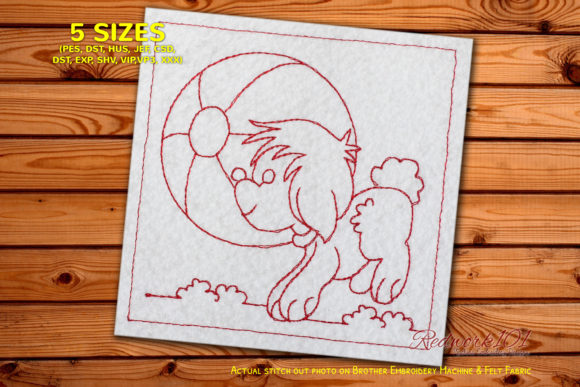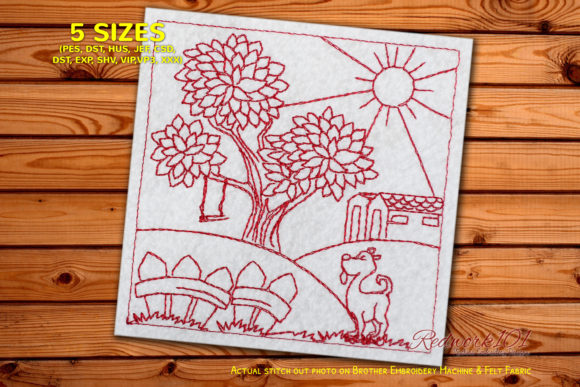
Dog Standing in Front of House Redwork
First Impressions at the Craft Fair Booth
When I first opened the Dog Standing in Front of House Redwork embroidery file, I immediately recognized its potential for the craft fair circuit. This machine embroidery design strikes a careful balance between sentimental appeal and clean, repeatable production. The image of a loyal guard dog stationed in front of a house feels both iconic and cozy, which is exactly the kind of emotional hook that draws customers to a handmade product booth. As a designer who has prepped dozens of designs for weekend markets, I can tell you that the best-selling pieces are the ones people understand at a glance. Dog Standing in Front of House Redwork delivers that instant readability.
The redwork style adds a classic, almost farmhouse charm. It is not overly loud or modern, but it carries a warm nostalgia that works well on tea towels, tote bags, and kitchen linens. The description mentions that the box stitch is optional and that the outer box color is variable, which gives you flexibility as a maker. You can offer the design as a standalone focal piece or framed in a decorative border. That small choice can significantly change the perceived value of your finished product.
Visual Appeal and Customer Attention
At a crowded craft fair, your display has only a few seconds to capture a browser's eye. Dog Standing in Front of House Redwork reads as a bold silhouette with enough detail to feel intentional without becoming cluttered. The dog is described as both a guard dog and a cutesy figure, which suggests the design can appeal to customers looking for whimsical pet decor as well as those wanting a more rustic, protective symbol. This dual emotional pull is a strong advantage for a small shop product.
The red thread on a natural or light background creates high contrast. That contrast is critical for booth visibility. A display of embroidered tote bags or tea towels featuring this design will pop against a neutral tablecloth or wooden shelf. I recommend stitching a sample on cream linen or unbleached cotton to test how the redwork stands out under typical market lighting. If your booth uses warm lamps, the red will feel even more inviting.
Tote Bags and Market Bags
This design is an excellent candidate for a tote bag design. The house-and-dog motif is centered and balanced, making it easy to place on the front panel of a standard canvas tote. Customers shopping at handmade markets often look for unique, personal bags, and a redwork dog in front of a home triggers a sense of belonging and loyalty. I would stitch it at a medium size so it acts as a focal design rather than a small accent. This allows the detail of the house and dog to remain clear after repeated use and washing.
Apron Embroidery
For an apron embroidery project, Dog Standing in Front of House Redwork works beautifully on the bib or lower pocket area. Cooking enthusiasts and pet lovers are a natural cross-section at craft fairs. The redwork style is also forgiving on aprons that see regular wear because the single-color stitching holds up well and does not show uneven fading as multicolor designs might. Just be sure to test the stitch density on midweight cotton or a cotton-poly blend before committing to a batch.
Tea Towel Embroidery
Tea towels are one of the highest-margin items you can produce for a craft fair, and this design is perfectly suited for them. The elongated vertical orientation of a house with a dog in front fits naturally on a towel's surface. I suggest placing the design about one-third of the way down from the hem so it is visible when the towel is folded or hanging. Many Etsy sellers and boutique makers find that pet-themed towels sell consistently, and Dog Standing in Front of House Redwork offers a fresh alternative to generic dog paw prints or bone motifs.
Embroidered Patches
If you sell embroidered patches, this design can be digitized as a patch with a satin border. Patches are low-cost, high-perceived-value items that move quickly at markets. A customer might buy one to sew onto a jacket, a bag, or a gift. The redwork style gives the patch a handcrafted feel that mass-produced patches lack. Just be cautious with tiny details; if the house has very small windows or the dog has fine features, those may need to be simplified for the patch format to avoid losing clarity.
Caps and Small Pouches
Putting this design on a curved cap surface requires careful hooping and a well-structured stabilizer. The redwork approach works in your favor here because a single color is easier to align on a curve than a multicolor design. For small pouches and giftable handmade items, consider scaling the design down. Check that the dog and house still register as a clear image at a smaller hoop size. I always stitch a test on scrap fabric before running a batch, and I recommend you do the same.
Pillow Covers and Home Decor
A pillow cover featuring Dog Standing in Front of House Redwork becomes a conversation piece on a sofa or bench. Home decor buyers are often willing to pay a premium for unique, hand-stitched items. The design feels decorative without being too trendy, which means it can sit on a shelf for multiple seasons. If you offer the box stitch option, it frames the image nicely and increases the finished product's polish.
Practical Selling and Production Points
From a production standpoint, Dog Standing in Front of House Redwork is efficient. Single-color redwork designs generally have fewer thread changes and lower stitch counts than multicolor alternatives. This means faster embroidery times, less stabilizer waste, and easier consistency across a batch. For a craft fair seller prepping dozens of items, that efficiency translates directly into profit.
The design also photographs well for online listings. If you sell on Etsy or your own site, you can create a printable mockup of the design on a tote bag or towel and use that as your primary image. The high-contrast red on light backgrounds is very camera-friendly. I suggest making at least one real mockup for your booth display and for your digital listing photos. Customers trust a real stitched sample more than a digital rendering.
Careful-Use Notes
- Dense stitch areas: If the original digitizing includes heavy fill areas, test on your fabric before bulk production. Dense redwork can cause puckering on lightweight fabrics like handkerchief linen.
- Tiny details: Small windows, door knobs, or dog facial features may become muddled at reduced sizes. Scale the design to at least 4 inches wide for the details to read clearly.
- Textured towels: Deeply textured tea towels, such as waffle weave or heavy terry, can distort fine redwork lines. Use a water-soluble topper and a medium-weight cutaway stabilizer to maintain stitch definition.
- Curved cap surfaces: A tight curve can shift the design's alignment. Hoop with a firm stabilizer and consider a temporary adhesive spray to keep the fabric from slipping.
- Dark fabric: Red thread on dark fabric loses contrast quickly. If you want to offer this design on navy or black items, consider using a white or gold thread instead of red, or stick to light-colored grounds.
Designer Notes Before Production
Before you stitch your first batch for the upcoming market, go through this checklist. First, test the design on scrap fabric that matches your intended product base. Confirm that the stitch density feels appropriate—not too loose, not too tight. Check the thread contrast by holding the sample at arm's length under your booth lighting. Review the spacing around the design to ensure it will not crowd the edges of your product.
Confirm your hoop size matches the design dimensions. If the design file does not specify exact stitch count, hoop size, or license terms, reach out to the seller or check the product page carefully. Understand the commercial licensing before you sell finished products. Many digital embroidery files come with a commercial use license, but it is your responsibility to verify that. A quick email to the designer can save you legal headaches later.
Use the correct stabilizer for your fabric type. For tote bags and aprons, a tear-away stabilizer often works, but if the fabric is stretchy or thin, switch to a cutaway. For towels, a water-soluble topper is essential to keep the redwork stitches from sinking into the nap. A well-stabilized stitchout looks professional and holds up through washes, which builds your brand's reputation for quality.
Building Your Booth Display
When you set up your craft fair booth, lead with a sample that shows Dog Standing in Front of House Redwork at its best. Stitch it on a crisp white apron or a natural linen tote and place it at eye level. Group companion products nearby—perhaps a tea towel and a small pouch with the same design. This creates a cohesive collection that encourages bundle sales.
Customers often ask, "Is this a real dog breed?" or "Can you customize it with my dog's name?" Be prepared to explain that this is a general design, but you may offer custom digitizing as an upsell. That kind of interaction builds buyer engagement and can lead to repeat customers.
Final Thoughts
Dog Standing in Front of House Redwork is a strong addition to any craft fair seller's lineup. It offers emotional appeal, practical production efficiency, and versatile product potential. The redwork style keeps it classic while the subject matter connects with pet lovers, home decor shoppers, and gift seekers alike. With careful testing and thoughtful placement, this design can become a reliable seller in your handmade product collection.
Before you commit to a full batch, stitch one sample, photograph it, and hold it in your hands. If it feels sturdy, clear, and charming, it will likely sell. That real-world test is the only one that matters at a craft fair. Good luck with your booth, and happy stitching.