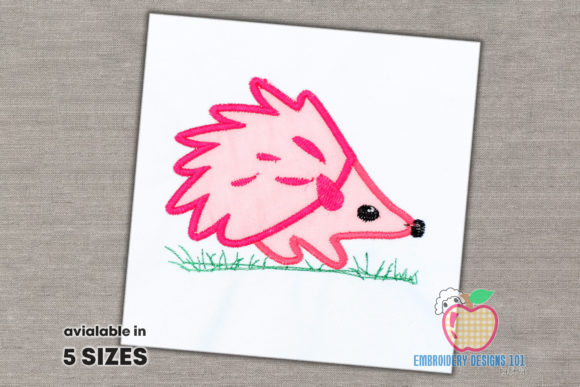
Cute Hedgehog Applique Pattern Craft Fair Review
When you spend your weekends behind a craft fair booth, you learn to judge a machine embroidery design in seconds. You ask yourself: will this stop a browser? Will it hold up after fifty washes? Can I stitch twenty of them before Friday? I recently pulled up the Cute Hedgehog Applique Pattern from the Wild Animals category, and I want to share my honest review from the perspective of someone who turns digital embroidery files into actual products for handmade markets. This is not a theoretical overview. This is what I see when I imagine loading my hoop and building my booth display.
First Impression of the Cute Hedgehog Applique Pattern
The moment I opened this machine embroidery design, I felt a strong woodland storybook mood. It is not trying to be hyper-realistic or overly elegant. It is friendly, slightly whimsical, and immediately readable. The applique approach gives it a soft, layered look that feels tactile and premium. In a booth full of embroidered goods, this design would stand out because it does not look like a generic clipart outline. It has personality. The hedgehog silhouette feels rounded and approachable, which matters when a customer is glancing at a tote bag from three feet away. I would describe the first impression as cute without being childish, modern rustic without being too farmhouse. That balance is hard to find, and this pattern settles into it naturally.
How the Pattern Performs on Real Craft Fair Products
I walked through my typical product lineup and mentally placed the Cute Hedgehog Applique Pattern on each item. Here is how it performed in my head.
Tote Bags and Market Bags
This is where the pattern shines brightest. A tote bag is a large, flat canvas, and the hedgehog design fills the center space beautifully. Because it is an applique pattern, the fabric layers add dimension that catches light differently than satin stitch. I would stitch it on a natural cotton tote in a warm tan or oatmeal color, then use a contrasting fabric for the hedgehog body such as a tiny plaid or a soft brown linen. The applique approach also keeps the stitch count reasonable, which means my machine runs faster and I can produce more units per hour. For craft fair sellers who need batch production efficiency, this design respects your timeline.
Apron Embroidery
An apron front pocket or bib area is a natural home for this pattern. The hedgehog sits at a good scale for a waist apron or a full bib style. I would keep thread colors muted: browns, creams, a soft grey for the belly, and a tiny black or dark brown satin stitch eye. The effect is professional without being fussy. Apron embroidery with this design would appeal to customers looking for kitchen gifts that feel handmade and intentional.
Tea Towel Embroidery
Tea towels are a staple at my booth, and the Cute Hedgehog Applique Pattern works well here as a centered motif or a slightly offset design near the hem. The applique layers add texture that feels good on a towel, but I recommend testing stitch density on terry or linen blend towels. Lighter towels will show the design clearly. Darker towels may require a lighter fabric applique piece to maintain contrast. The pattern reads clearly at a medium size, which is ideal for the standard tea towel format.
Embroidered Patches
I also sell iron-on and sew-on patches, and this hedgehog design converts beautifully into a standalone patch. The applique layers create a dimensional look that feels premium compared to all-digital embroidery. I would stitch it on a sturdy twill backing and trim the fabric close for a clean edge. Patches are a low-cost, high-perceived-value item at craft fairs, and this pattern would be a quick seller in a basket near the register.
Caps and Curved Surfaces
Putting this design on a cap requires careful attention to hoop size and placement. The hedgehog shape is compact enough to fit on a cap front without distortion. I recommend hooping a cap with a stiff stabilizer and testing the stitch out before committing to a batch. The applique fabric needs to be thin enough to bend with the cap curve but thick enough to cover the underlay. With proper preparation, the Cute Hedgehog Applique Pattern becomes a charming cap design that stands out in a sea of logo embroidery.
Small Pouches and Pillow Covers
For small products like fabric pouches, coin purses, or zipper cases, this pattern works as a focal accent. The scale is small enough to fit a 4x4 hoop comfortably, which means you can produce these items quickly. Pillow covers, especially in natural linen or cotton blends, benefit from the applique texture. A hedgehog pillow on a display bed or bench invites customers to touch the fabric, which is exactly what you want in a booth.
Handmade Gifts and Boutique Items
Anything that feels giftable benefits from this design. Baby blankets, burp cloths, wall hangings, or even simple framed embroidery hoops. The Cute Hedgehog Applique Pattern has a universal appeal that fits baby showers, woodland-themed nurseries, and rustic home decor. I would also consider stitching it on a patch to attach to a handmade card or gift tag.
Selling and Production Practicality for Etsy Sellers and Small Shops
Practicality matters when you are an Etsy seller or a small shop owner juggling multiple products. Here is what I value about this digital embroidery file from a production standpoint.
- Readability at a glance: The hedgehog shape is instantly recognizable. Customers do not need to lean in and squint. That quick recognition translates to more booth stops and more sales.
- Size flexibility: The pattern works as a small accent or a larger focal design. That versatility means one embroidery file can serve multiple products, which is excellent for inventory planning.
- Photography strength: The applique layers create shadows and depth that photograph well for Etsy listings. Flat embroidery can look two-dimensional in photos, but the fabric layers of this pattern give it a dimensional look that sells online and in person.
- Batch production repeatability: Because the steps are separated by color changes, I can pre-load thread colors and run multiple hoops with minimal intervention. The color change structure is clear and logical, which reduces errors during production runs.
- Multiple file formats: The pattern comes with multiple embroidery file formats, so I do not need to convert or worry about machine compatibility. I can stitch it on my multi-needle machine and also test it on a single-needle model without hassle.
Careful-Use Notes Every Embroidery Designer Should Consider
No design is perfect straight out of the file. Here are the areas where I pay close attention before cutting fabric.
Dense Stitch Areas and Tiny Details
Applique designs generally have lower stitch density than full fill embroidery, which is a production advantage. However, check the tack-down and detail stitches. If the hedgehog has small eye or nose details, those satin stitches should be wide enough to cover the underlay without gaps. I recommend testing the design on scrap fabric to confirm that small elements stitch cleanly. If the eye detail is too tiny, it may become a blur on textured fabric. Consider enlarging the design slightly if you are working with thick towels or fleece.
Thread Contrast and Fabric Tone
The hedgehog body relies on contrast between the applique fabric and the background. On a dark tote bag, use a light or medium brown applique fabric so the hedgehog silhouette pops. On a light towel, a deeper brown or charcoal applique works best. Check thread contrast for the detail stitches. If the thread color matches the applique fabric too closely, the detail will disappear. A slightly darker thread for the outline or detail steps adds definition.
Hoop Size and Spacing
Confirm the hoop size required for this design before you plan your production. The description does not specify exact dimensions, so I advise measuring the stitch area in your software. Leave enough margin around the design for hooping and fabric handling. If you plan to stitch multiple designs on one towel or tote, ensure the spacing between motifs is even.
Stabilizer and Fabric Texture
Applique designs need a stable foundation. Use a tear-away or cut-away stabilizer depending on fabric stretch. For caps and towels, I prefer a cut-away stabilizer to prevent distortion during washing. The applique fabric itself should be pre-washed if it is cotton, to avoid shrinkage after the first wash. Textured fabrics like linen or burlap require extra attention to the tack-down stitch density so the appliece fabric lays flat without puckering.
Dark Fabric and Clarity
If you stitch this design on dark fabric, the applique fabric needs to be opaque enough to cover the background. Light or medium brown applique on black fabric may require a double layer or a heavier fabric. Test a sample first. The last thing you want is a hedgehog whose belly shows the dark fabric underneath.
Curved Cap Surfaces
When stitching on caps, the hoop must be tight and the stabilizer stiff. The applique fabric should be thin and flexible. I recommend a test stitch on a practice cap before producing a batch. The hedgehog shape is compact enough to fit the cap front, but the curve can shift the applique alignment if the fabric is too thick.
Visual Appeal, Customer Attention, and Booth Display Strength
At a craft fair, you have about two seconds to catch a customer's eye. The Cute Hedgehog Applique Pattern earns that attention through shape recognition and texture. The layered applique creates a tactile invitation. Customers want to touch the fabric, and touching leads to buying. I would display this design on a tote bag propped on a stand, with a tea towel folded next to it showing the same motif. Repetition of a strong design across multiple products builds brand consistency. Customers start to associate that hedgehog with your booth, and they return next season looking for more.
The design also photographs well for printable mockups and Etsy listings. The dimensional quality of the applique reduces the flatness that sometimes makes embroidery hard to sell online. I would create a mockup with a warm, natural background and let the hedgehog be the focal point.
Practical Embroidery Designer Notes Before Production
Before you stitch this design for a market run, here is my checklist.
- Test the design on scrap fabric that matches your intended product. Adjust tension, thread type, and stabilizer as needed.
- Review the color change steps in your software. The steps are separated by color changes, which simplifies production, but confirm that the order makes sense for your machine.
- Confirm the hoop size and whether the design fits your available hoops. Do not assume it fits a 4x4 until you check.
- Check stitch density. Applique designs should be gentle on the fabric. If the tack-down or detail stitches are too dense, consider reducing density in your software or using a lighter stabilizer.
- Create at least one real mockup that you can photograph and display. A stitched sample sells more than a digital preview.
- Compare fabric colors for the base and the applique. Test three or four combinations and pick the one with the best contrast.
- Confirm commercial licensing before selling finished products. The description says "please" but does not state license terms. Verify that your use is covered under the license agreement. Do not assume.
Final Thoughts on the Cute Hedgehog Applique Pattern for Handmade Markets
This machine embroidery design is a strong addition to any craft fair product lineup. It combines the warmth of applique with the precision of digital embroidery, and it appeals to a broad audience. It works on tote bags, tea towels, aprons, patches, caps, pouches, and pillow covers. It photographs well, it stitches efficiently, and it invites customer interaction. For Etsy sellers and small shop owners who need a reliable, attractive design that produces repeatable results batch after batch, the Cute Hedgehog Applique Pattern deserves a spot in your active design assets. Test it, mock it up, and put it on your booth table. I expect it will earn its place quickly.