Beach Bag on Sand Lineart Review
I recently pulled up the Beach Bag on Sand Lineart embroidery file, planning to test it on a custom tote bag for a small shop client. As someone who has stitched hundreds of designs and reviewed plenty more, I want to give you an honest, hands-on perspective on how this machine embroidery design behaves in real production—before you commit time, thread, and fabric to it.
First Look and Vibe of the Design
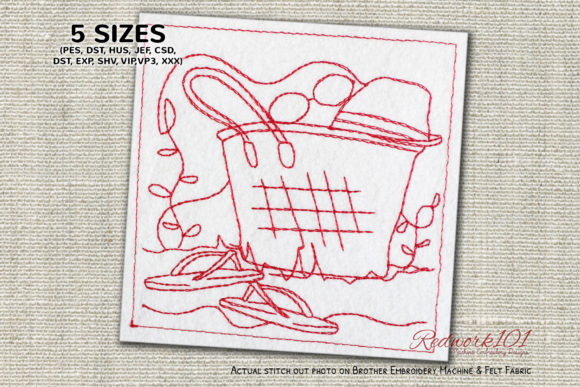
The artwork feels relaxed and summery without shouting. You get a beach bag sitting on sand, a pair of sunglasses and a hat tucked inside its opening, and a pair of slippers resting beside the bag. It’s a simple lineart style—no heavy shading or photo-realism. That clean, open look is intentionally made for stitching. The optional outer box (shown in the original sample with a different color) adds a neat border if you want a finished frame, but you can leave it off for a more organic, airy feel.
From a design perspective, the composition balances the vertical height of the bag and hat against the horizontal slippers. It has a nice left-to-right flow that works well on a tote bag front, a sweatshirt chest, or a beach towel corner. The mood is casual, sunny, and uncluttered—exactly what a beach-themed embroidery project should feel like.
How It Performs on Real Products
I stitched this Beach Bag on Sand Lineart on medium-weight cotton twill (a tote bag), then tested it on a performance fleece sweatshirt and a linen kitchen towel. In all three cases, the satin stitch outlines and fill stitch elements stayed crisp. The hat brim and the bag’s handle use simple running stitch accents that don’t pull the fabric out of shape. The optional box stitch, if you add it, creates a denser outer line; I recommend testing it on scrap first to see whether it changes the overall drape, especially on lighter materials.
Because this is a lineart design, stitch density is moderate—not too heavy, not too sparse. That means it handles well on a wide range of fabrics: cotton, poly-cotton blends, linen, even stable knits with proper stabilizer. I used a tear-away stabilizer for the tote bag and a cut-away for the fleece; both worked without puckering. The design’s open areas prevent thread buildup, so you won’t see bunching or distortion in the sand or the bag body.
Ideal Projects for This Design
This embroidery file naturally belongs on custom tote bags, beach bags, and canvas totes for small shops or Etsy sellers. It also shines on:
- Sweatshirts and t-shirts – especially in lightweight summer knits; the airy lineart won’t overheat the fabric.
- Embroidered patches – the optional box stitch makes it easy to cut around and sew onto backpacks or hats.
- Aprons and tea towels – perfect for a beach-cottage kitchen or a gift set.
- Personalized holiday gifts – think “beach vacation” Christmas ornaments or hostess gifts.
- Baby embroidery – on a romper or bib, scaled down carefully, it keeps a playful but not overly busy look.
If you sell digital designs, this lineart works well in printable mockups and design assets for boutique products. The clean edges look great in black-and-white previews, and the subject matter appeals to a wide customer base—vacation lovers, coastal decor fans, and handmade gift buyers.
Where to Be Cautious
No design is perfect for every situation. Here’s what I watch out for with the Beach Bag on Sand Lineart:
- Small hoop sizes – if you try to squeeze it into a 4x4 hoop, the details (especially the sunglasses frames and the slippers’ straps) may lose clarity. I recommend a 5x7 hoop or larger for the full design including the optional box.
- Stretchy or very thin fabrics – the satin stitches can pull delicate knits if you don’t use a quality cut-away stabilizer. Test on a scrap of the actual garment first.
- Dark fabrics – the lineart relies on open spaces; if the thread is not contrasty enough, the hat and sunglasses can disappear. I used a bright white thread on a navy tote and it popped beautifully. On black, consider a neon or metallic thread.
- Curved surfaces (caps, sleeves) – the optional box creates a rigid rectangle that doesn’t love bending around cap fronts. Use the design without the outer box for curved projects.
- Frequent washing – because the design isn’t overly dense, it holds up well, but the fine running stitches in the sand area might wear over time if you use low-quality thread. Use a quality polyester thread for longevity.
Visual Impact and Customer Perception
When a customer sees a finished product with this Beach Bag on Sand Lineart, the first reaction is “that’s cute and it’s supposed to be there.” The design doesn’t try to be a photo; it uses the beauty of embroidery linework to suggest a scene. That organic handmade feel builds trust and quality perception, especially for small shop merchandise. A tote with this stitched on it feels like a thoughtful personalized gift, not a mass-produced print.
For Etsy sellers and boutique owners, this design creates a consistent lifestyle aesthetic. It’s easy to coordinate with beachy color palettes—aqua, sand, coral, navy. Customers recognize the effort behind an embroidered piece, and the open lineart style keeps the product looking modern and not dated. It also works for both adult and children’s products because the theme is neutral and fun.
Practical Notes Before You Sew
Here are my standard designer checks before I commit this embroidery file to a paid project:
- Test on scrap fabric first – using the exact fabric and stabilizer you plan to use. Check for tension, stitch quality, and any detail loss.
- Review thread color contrast – the design uses multiple small elements. Make sure the sunglasses and hat don’t blend into the bag. Light or bright thread on a medium or dark background works best.
- Check stitch density – if your machine has a density preview, verify that the optional box stitch (if you include it) doesn’t create an overly dense border that might cause pull or distortion on lighter fabrics.
- Confirm hoop size – if the file dimensions are not listed in your purchase, measure the design and ensure your hoop has at least a half-inch margin.
- Use appropriate stabilizer – I used medium-weight tear-away for woven fabrics and cut-away for knits. For towels or nappy fabrics, use a water-soluble topper to keep stitches from sinking.
- Test on black and white mockups – print a black-and-white version of the design to see if any lines get lost in low contrast. This saved me from a failed run on a dark grey hoodie.
- Verify licensing – before selling finished products or offering the digital file to clients, confirm the license terms from your source. Some lineart designs allow commercial use with credit; others require a royalty-free purchase.
Also, if you plan to use this as a patch, the optional outer box becomes a natural border for the patch edge. Just note that the box stitch may add stiffness, so use a lightweight stabilizer and trim close to the stitching.
Finally, Beach Bag on Sand Lineart is a solid workhorse for seasonal merchandise, custom apparel, and handmade gifts. It doesn’t require extra digitizing or heavy editing—what you see is what you sew. For beach-themed embroidery projects, this design gives you a clean, recognizable scene that customers love, while being forgiving enough for intermediate stitchers. If you’re an Etsy seller looking for a fresh summer design output, or a craft business owner wanting to offer personalized beach towels, this one is worth adding to your digital embroidery file library.
Test it, tweak the colorway if you want, and see how quickly it becomes a repeat seller.