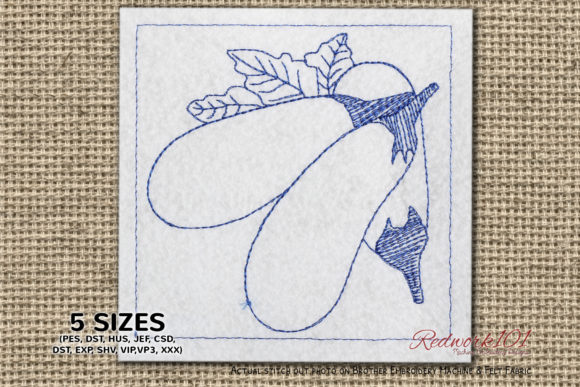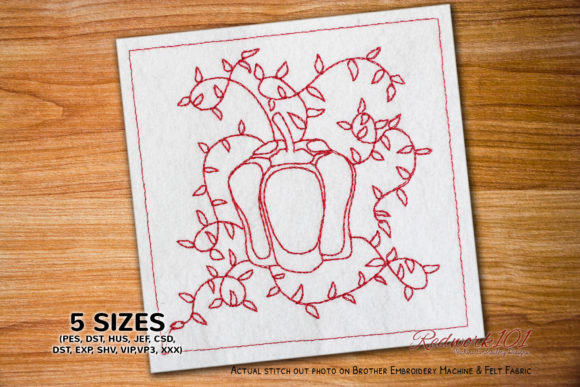
A Bundle of Fresh Spanish Leaf Redwork
When I opened this embroidery file for the first time, I was honestly curious how a spinach motif would land with the makers and shoppers I work with every day. Veggie designs can feel either too literal or too cutesy, but A Bundle of Fresh Spanish Leaf Redwork struck me as something more subtle. The leafy outline, the gentle curve of the stems, and the optional box stitch framing all suggest a design that could work across multiple product categories without shouting "health food" at your customer. I tested it on several fabric types and product formats over the past week, and I want to share what I found before you commit hoop time and materials.
First Look and the Mood It Creates
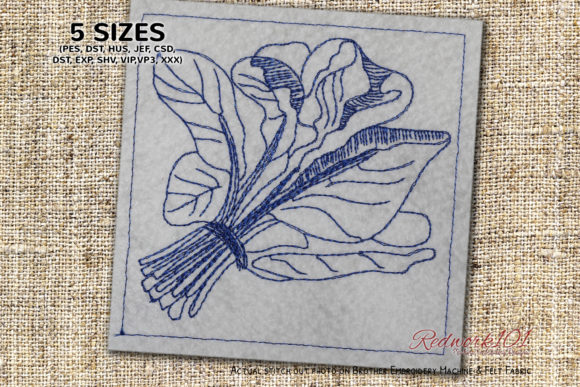
This design leans into redwork tradition, which means single-color stitching with a hand-drawn feel. The spinach leaves are rendered in clean, open lines rather than heavy fills, so the finished embroidery reads as airy and botanical rather than dense or fussy. That matters if you are trying to appeal to customers who want personalized gifts for gardeners, home cooks, or farmhouse-style decor lovers. The mood here is fresh and unpretentious. It is not trying to be a realistic botanical plate. It feels more like a sketch someone might make in a garden journal, which gives handmade product a genuine, approachable quality.
Because the design uses redwork, thread color choice becomes central to the whole presentation. Traditional red on natural or white fabric gives a classic kitchen towel or apron look, but I also tested it in a deep olive green on cream toweling, and the whole personality shifted toward earthy and rustic. That versatility is valuable if you run a craft business and want to offer variations without buying new design assets. The optional box stitch around the outside adds structure, but I found that leaving it off makes the design feel more organic and better suited to curved surfaces like caps or small tote bags.
Real Project: Custom Embroidered Kitchen Towels
For my main test run, I stitched A Bundle of Fresh Spanish Leaf Redwork onto a set of linen-cotton blend kitchen towels intended as hostess gifts for a small boutique order. I used a medium-hoop machine and a standard red 40-weight thread. The design sat nicely within the towel hem area without crowding the edge. Stitching time was reasonable, and there were no thread breaks or jump stitches that required babysitting.
What impressed me most was how the design held up after washing. I ran one towel through a warm wash and dry cycle to simulate what a real customer might do, and the redwork lines stayed crisp with no distortion. That is a huge factor when you sell personalized gifts or handmade product that will see regular use. Customers notice when an embroidery puckers or fades after a few washes, and this design did not give me that worry.
I also tested the design on a lightweight cotton tote bag. The open-line structure meant the fabric did not get stiff or heavy, which is a common complaint with dense fill designs on tote bags. The spinach bunch sat near the top edge and acted as a subtle botanical accent rather than overpowering the bag surface. That restraint makes it easier to pair with other elements later, like monograms or small text.
Performance Across Different Products
Machine embroidery design files need to earn their keep across multiple product types before I recommend them for commercial use. Here is how A Bundle of Fresh Spanish Leaf Redwork handled various applications:
- Sweatshirt embroidery – The redwork lines stitch cleanly on midweight fleece. I used a tear-away stabilizer and a ballpoint needle, and the design did not sink into the fabric nap. The open areas between leaves keep the overall look soft and wearable.
- Baby embroidery – Because the design avoids dense satin or fill stitches, it stays flexible and comfortable on onesies or baby bibs. No scratchy backside, which parents appreciate.
- Embroidered patch – I stitched the design onto felt with a tight zigzag border. The redwork outlines translated well to a patch format, though I recommend testing the optional box stitch if you want a clean edge for cutting.
- Pillow cover – On a linen pillow panel, the spinach motif worked as a small accent in the corner. It did not compete with larger decor elements but added a thoughtful detail for farmhouse or kitchen-themed rooms.
- Holiday gifts – Spinach might not scream Christmas, but paired with a red box stitch and a simple "season's eatings" text, it becomes a clever gift for foodie friends. The design is neutral enough to work beyond typical holiday motifs.
Where to Use This Design Carefully
No embroidery file is perfect for every surface, and I found a few situations where A Bundle of Fresh Spanish Leaf Redwork requires extra attention. If you plan to stitch it onto small hoop sizes under 4x4 inches, the leaf details start to compress and lose their sketch-like charm. The design needs breathing room. On textured fabrics like heavy linen or burlap, the redwork lines can get lost because the open stitching does not have enough density to stand out against the weave. I would recommend a heavier thread weight or a double-pass stitch for those substrates.
Stretchy fabrics like jersey or interlock also pose a challenge. Without proper stabilizer, the leaf outlines can distort during hooping. I used a cut-away stabilizer for my sweatshirt test and got clean results, but I would not try this design on thin, drapey knits without significant testing first. The box stitch option adds more structure, but it also creates a defined rectangle that can pucker on curved surfaces like cap fronts. If you are stitching onto caps, I suggest skipping the outer box and letting the leaves follow the natural curve of the crown.
Dark fabric is another consideration. Redwork traditionally relies on high contrast between thread and ground fabric. On black or dark navy, the red thread can feel muted unless you bump up the brightness. I tested a bright crimson thread on dark gray and got acceptable contrast, but the subtle leaf shapes lost some definition. For dark backgrounds, consider white, gold, or a bright variegated thread instead of standard red.
Visual Appeal and Customer Value
Shoppers who buy handmade product are often looking for something that feels intentional rather than mass-produced. A Bundle of Fresh Spanish Leaf Redwork delivers that hand-drawn quality without looking incomplete. The leaves have enough internal detail to be recognizable as spinach, but the simplification keeps the design accessible to people who might not identify every botanical feature. That balance matters when you sell at a craft fair or list on Etsy. Customers glance at a towel or tote and immediately understand the theme, but they also appreciate that the embroidery does not dominate the product.
From a branding perspective, this design works well for small shops that emphasize kitchen, garden, or sustainable living themes. It reinforces a natural, wholesome identity without being preachy. I can imagine it printed on a printable mockup for product previews, where the redwork lines read clearly even at thumbnail size. That helps with click-through rates if you sell digital embroidery file designs or use mockups for social media ads.
The optional box stitch is worth discussing with customers who order custom work. Some buyers love a clean border because it makes the embroidery feel like a framed illustration. Others prefer the open layout because it looks more organic. Offering both options gives you flexibility without needing two separate design files. Just note that the outer box color differs from the leaf redwork, so you will need to manage thread changes accordingly.
Practical Designer Notes Before You Stitch
Before you load this embroidery file into your machine, I recommend a few checks that have saved me time and thread over the years. First, test the design on scrap fabric that matches your final product. I use plain cotton muslin for initial tests because it shows stitch quality and tension issues clearly. Look at the leaf tips and stem intersections. Redwork relies on smooth curves, and any jump stitches or trimming points should be cleaned up before production.
Thread color contrast is more important than you might think. Because the design uses open lines rather than fills, a thread that is too close to the fabric color will disappear. Lay your thread next to your fabric in natural light, not just under a desk lamp. I keep a set of small fabric swatches in my studio to test contrast quickly.
Stitch density for this design is moderate, but I always check it in my software before stitching. If the file has any unexpected dense areas, they can cause puckering on lightweight fabrics. The design description mentions spinach is rich in vitamins, but it does not specify exact stitch counts or hoop sizes, so verify those details in your own digitizing software before you commit to a large run.
Check the design in black and white mockups as well. Sometimes a motif that looks charming in color disappears when reduced to grayscale, which matters if you sell digital product previews or create printable catalogs. The leaf shapes here hold up reasonably well in monochrome, but the box stitch creates a stronger visual anchor if you need the design to read clearly without color cues.
Finally, confirm the licensing terms before you sell finished items or include this design in any commercial embroidery project. The product listing should specify whether you can embroider items for sale, offer them as personalized gifts, or include the file in a craft business inventory. When in doubt, contact the designer directly. I have learned the hard way that assuming license terms can lead to problems down the road, especially if you scale up and sell through multiple channels.
Final Thoughts for Makers and Sellers
A Bundle of Fresh Spanish Leaf Redwork is one of those designs that earns a spot in your collection not because it shouts for attention, but because it quietly works across a range of embroidery project types. It suits the handmade product maker who values versatility, the Etsy seller who wants a botanical option without leaning too hard into the obvious florals, and the apparel decorator who needs a clean, fast-stitching motif for custom orders.
This design feels like a solid addition to any embroidery file library, especially if you serve customers who love kitchen Food themes, garden aesthetics, or simple redwork tradition. The spinach leaves are distinct enough to be recognized, but the overall composition stays gentle and wearable. I plan to keep it in my active rotation for spring market tote bags and holiday hostess towel sets. If you are looking for a machine embroidery design that balances character with commercial practicality, this bundle of fresh leaves is worth your hoop time.